
A kitchen update does not have to mean a full demolition, a huge loan, or months of disruption. In many homes, the best improvements come from smart planning rather than big spending. A few targeted changes can improve storage, lighting, appearance, and function without forcing you into a top-to-bottom remodel.`
If you are trying to improve your kitchen without overspending, these strategies can help you stretch your budget while still getting a result that feels fresh, useful, and worth the effort.
Start By Identifying What Truly Needs Attention
Before choosing finishes or getting quotes, figure out what is actually wrong with your kitchen. Some issues are daily frustrations, while others are mostly cosmetic. If you treat every problem like it deserves equal attention, your budget will disappear quickly.
A good first step is to divide everything into three categories:
- Problems that affect safety or function
- Cosmetic issues you want to improve
- Upgrades that can wait
This helps you separate real needs from wish-list items. For example, damaged counters, poor task lighting, broken drawers, or worn flooring may deserve attention before decorative upgrades. On the other hand, a dated backsplash or old paint color may bother you visually but not need urgent money.
Talking to home contractors early can help, even if you are still planning. A brief consultation may reveal what is realistic, what could become expensive, and what changes offer the best return for your budget. That kind of clarity can save you from making decisions based only on appearance.
Ask yourself:
- What annoys me every day?
- What is broken or wearing out?
- Which upgrades would improve how I cook, clean, or store things?
- Which changes are mostly aesthetic?
Budget renovations work best when the plan is honest. Once you know what matters most, it becomes much easier to spend with purpose.
Refresh Cabinets Instead Of Replacing Them
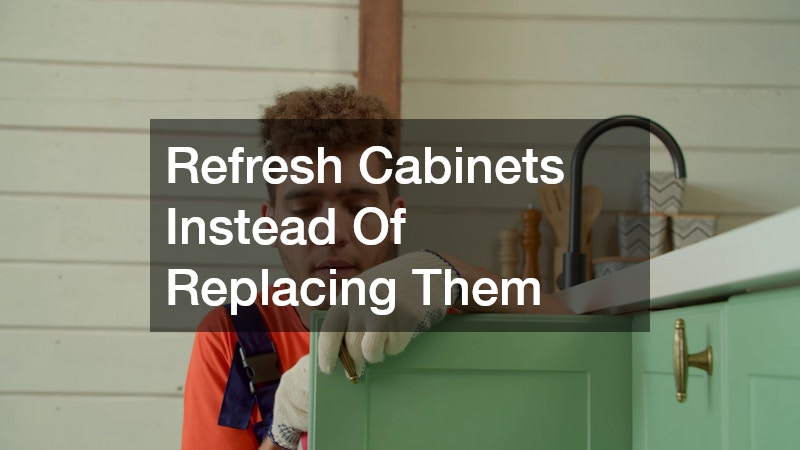
Cabinets are often the most expensive part of a kitchen update, but they are also one of the best opportunities to save money. If your existing cabinetry is structurally sound, you may not need a full replacement to get a dramatically better look.
Many kitchens can be transformed by updating the surfaces you see most. Painting, refinishing, replacing hardware, or adding trim can completely change the feel of older cabinets without the price tag of starting over. This approach works especially well when the cabinet boxes are solid and the current layout is still usable.
Simple ways to update cabinets include:
- Repainting doors and frames
- Replacing hinges and handles
- Adding crown molding or trim
- Refacing only visible surfaces
- Mixing a few open shelves into the design
Looking at current kitchen cabinet designs can help you choose a style direction, but you do not need to mimic a luxury showroom. Cleaner lines, more updated hardware, and a cohesive color palette often do more than expensive customization.
Your cabinets may be worth keeping if:
- Doors still open and close well
- The boxes are solid and level
- There is no major water damage
Replacing everything is sometimes necessary, but on a tight budget, saving cabinetry wherever possible can free up money for lighting, flooring, or appliance issues that affect the kitchen more directly.
Keep The Existing Layout Whenever Possible
One of the fastest ways to make a kitchen renovation expensive is moving plumbing, electrical, or gas lines. Relocating the sink, stove, or dishwasher may seem like a simple change, but it often creates labor costs that stretch far beyond the visible upgrade.
That is why one of the smartest budget moves is to keep the basic layout intact. A good kitchen remodeler can often improve flow and function without relocating every major element. Better storage, better lighting, and smarter use of existing space can make the room feel more efficient without triggering a chain reaction of hidden costs.
Keeping the same layout usually helps you avoid:
- Plumbing relocation
- Electrical rewiring
- Gas line changes
That said, keeping the layout does not mean ignoring problems. Good kitchen remodeling is still about making the room easier to use. Sometimes small changes do a lot: adding pull-out storage, changing cabinet interiors, or removing one awkward barrier can improve the whole space.
A layout change may be worth it when:
- Appliances block each other
- Storage is unusable
- The kitchen has real clearance or safety issues
- The room does not function for basic tasks
Otherwise, working within the current footprint is often the best way to protect your budget without sacrificing results.
Repair Appliances Before You Replace Them

New appliances can eat up a renovation budget fast. Before assuming everything old needs to go, find out what can be saved. In many kitchens, repairing one or two major appliances makes more financial sense than replacing the full set.
A kitchen appliance repair service can help you determine whether a unit still has useful life left. Many appliance repairs cost far less than replacement and can buy you enough time to put money toward upgrades that change the room more visibly, such as cabinets, flooring, or lighting.
Repair is often worth considering when:
- The appliance is not very old
- The issue is limited and fixable
- Replacement would force a larger spending decision
- The unit still fits your needs and layout
- The repair cost is reasonable compared to replacement
This can apply to:
- Dishwashers with drainage issues
- Ovens that heat unevenly
- Refrigerators with seal or cooling problems
- Ranges with ignition issues
Not every appliance is worth saving, of course. If a unit is old, unreliable, inefficient, or repeatedly failing, replacement may still be the better move. But checking first can prevent unnecessary spending and help you make a smarter decision.
Choose Flooring Based On Value, Not Hype
Flooring affects the whole feel of a kitchen, but it is easy to overspend here because some materials look impressive in a sample and expensive in the final invoice. The best budget flooring choice is usually the one that balances appearance, durability, and installation cost.
Talking with local flooring contractors can help you understand which materials make sense for your kitchen and your budget. They can also tell you whether hidden prep work will change the real cost. That matters, because some “affordable” floors stop looking affordable once subfloor repairs or leveling are added.
Popular budget-conscious flooring options include:
- Luxury vinyl plank
- Sheet vinyl
- Durable laminate rated for kitchens
- Some entry-level tile options
When comparing materials, think about:
- Water resistance
- Ease of cleaning
- Comfort underfoot
- Installation cost
- Subfloor condition
Some home contractors can coordinate flooring along with the rest of the renovation, which may simplify scheduling. Still, it is smart to get clear pricing and understand whether prep work is included.
A great floor is not always the priciest one. It is the one that holds up well, looks right in the room, and does not trigger extra costs you never planned for.
Use Lighting To Make The Whole Kitchen Look Better

Lighting is one of the most affordable ways to improve a kitchen, and it often has a bigger visual impact than people expect. A room with outdated finishes can still feel brighter, cleaner, and more modern when the lighting is improved.
Instead of relying on one overhead fixture, think in layers:
- Ambient light for overall brightness
- Task light for prep and cooking
- Accent light for warmth and visual depth
Under-cabinet lighting is especially effective because it improves visibility while also highlighting your cabinetry. It can make older cabinets look more intentional and polished, which is a big win when you are trying to renovate without replacing everything.
A smart home lighting system can also add convenience without requiring a major rebuild. Dimmers, programmable switches, and app-controlled features can make the kitchen feel more updated while helping you use light more effectively throughout the day.
Lighting upgrades can help:
- Reduce dark corners
- Improve prep visibility
- Make a small kitchen feel larger
- Highlight better-looking surfaces
- Add a more finished feel
If your budget is tight, lighting deserves serious attention. It is one of the few upgrades that improves both appearance and daily function at the same time.
Mix New And Existing Appliances Strategically
A lot of homeowners think appliances need to match perfectly, but replacing every unit at once is one of the easiest ways to overspend. In many cases, a phased approach works much better.
Instead of buying a full package, decide which appliances truly need to be replaced now and which can stay a little longer. Appliance service can help extend the life of appliances that are still working reasonably well, which buys you time and keeps the project manageable.
A mixed approach works well when:
- One appliance is clearly failing
- Others still perform adequately
- You want to avoid financing a full package
- You plan to improve the kitchen in stages
To keep a mixed kitchen looking cohesive:
- Stick to similar finishes when possible
- Replace the most visible pieces first
- Keep surrounding lighting and hardware consistent
- Avoid overly trendy styles
This strategy is especially useful when a kitchen appliance repair service can keep higher-cost appliances going for another year or two. That gives you room to spend where it matters most now without feeling forced into a full appliance purchase.
Spend On High-Impact Details And Save Elsewhere

On a limited budget, you do not need every part of the kitchen to be premium. You need the most noticeable parts to look intentional and the most-used parts to work well. That is the real trick.
In most kitchens, people notice:
- Cabinet fronts
- Hardware
- Lighting
- Flooring
- Faucets and visible fixtures
That is why browsing kitchen cabinet designs can be useful even if you are not buying new cabinets. You can borrow the visual ideas that make kitchens feel current, then apply them through paint, trim, and hardware instead of expensive custom work.
A smart home lighting system can also create a more upscale feel without a luxury price tag. Better lighting control and layered illumination often make the kitchen feel more expensive than it actually was.
Places where you can often save:
- Interior cabinet accessories you do not need
- Complicated tile layouts
- Expensive decorative details
- Big layout changes done mostly for appearance
- Premium upgrades with little everyday payoff
A budget kitchen should not try to impress everywhere. It should look good where the eye goes first and work well where you need it most.
Compare Quotes Carefully Before You Commit
Multiple quotes are smart, but the cheapest one is not always the best deal. A low number can hide missing labor, weak materials, unrealistic allowances, or costs that show up later as change orders.
When comparing bids from a kitchen remodeler, look beyond the total. Make sure you understand what is included and what is not. One estimate may look higher because it is more complete, while another may look cheaper simply because key tasks were left out.
Compare details like:
- Scope of work
- Material allowances
- Labor and prep work
- Cleanup and disposal
- Timeline
It can also help to review past appliance service records if you are keeping older units. Repeated repair history may suggest that a unit is not worth designing around long term.
Be cautious of quotes that:
- Are much lower than the others
- Lack detail
- Use vague language
- Exclude prep work
- Promise suspiciously fast completion
A clear, realistic quote protects your budget better than an appealingly low one.
Phase The Renovation Instead Of Doing Everything At Once
One of the best budget hacks is accepting that the kitchen does not need to be perfect in a single round. Trying to do everything at once often leads to rushed decisions, lower-quality choices, or debt that feels painful later.
A phased renovation lets you improve the room step by step. You might start with paint, cabinet updates, and lighting, then handle flooring later, then replace appliances over time as needed. The kitchen still improves, but the spending becomes much easier to manage.
A practical phased plan might be:
- Fix damage or safety issues first
- Refresh cabinets and hardware
- Improve lighting
- Repair usable appliances
This keeps momentum going without forcing every decision into one expensive window.
A better kitchen does not always come from a giant renovation. More often, it comes from making smarter choices with the money you have. When you keep the layout simple, save cabinets that still work, repair appliances when it makes sense, improve lighting, and phase the project carefully, you can get a kitchen that feels significantly better without overspending.